


 Seenclassified
 Request Access
Sudoku: Discover the Best Strategies to Master Every Puzzle
What Is Sudoku?
Sudoku is a popular number puzzle game that challenges players to use logic, concentration, and problem-solving skills. Although the game uses numbers from 1 to 9, it does not require advanced mathematics. Instead, success depends on recognizing patterns, eliminating impossible choices, and making logical decisions.
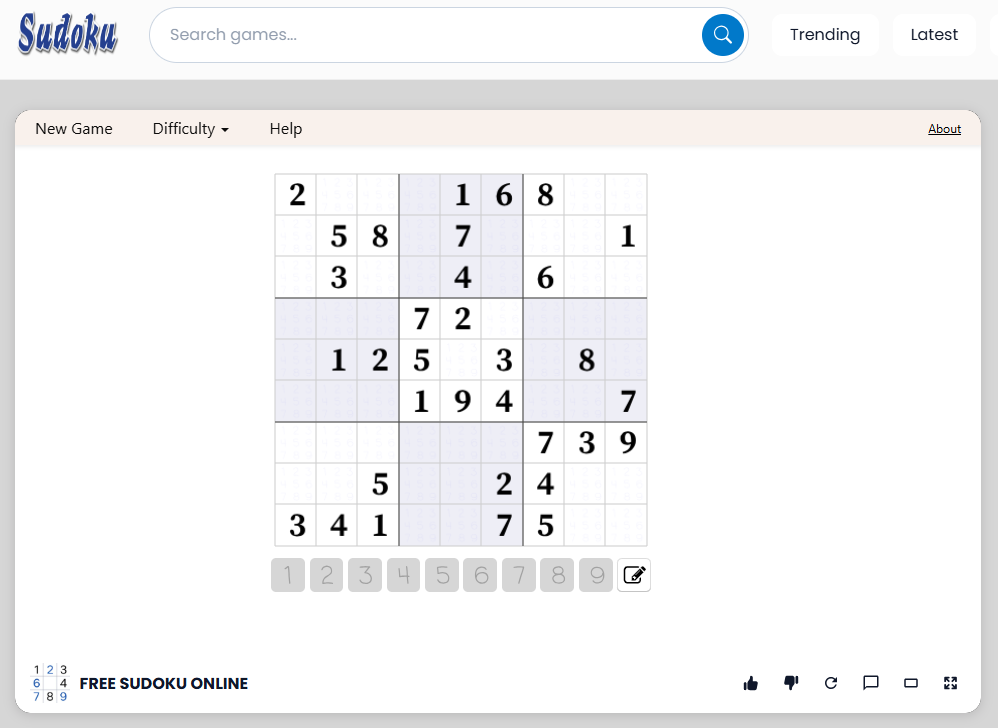
The classic Sudoku puzzle features a 9×9 grid divided into nine smaller 3×3 boxes. Some cells already contain numbers, while the remaining cells must be completed according to specific rules. Each row, column, and 3×3 box must contain every number from 1 to 9 exactly once.
Sudoku appeals to players of different ages because it combines simple rules with increasingly complex challenges. Beginners can start with easy puzzles, while experienced players can explore difficult grids that require advanced solving techniques. Whether played in a newspaper, on paper, or through an online platform, Sudoku offers an enjoyable way to exercise the mind.
How to Play Sudoku
Learning Sudoku is straightforward because the game follows a few essential rules. Understanding these rules provides a strong foundation for solving puzzles efficiently.
Understand the Sudoku Grid
A standard Sudoku board contains 81 cells arranged in nine rows and nine columns. These cells form nine smaller boxes, each measuring three rows by three columns.
The objective is to fill every empty cell with a number between 1 and 9. However, each number can appear only once in any row, column, or 3×3 box. Players must examine the existing numbers carefully before deciding where to place a new digit.
Follow the Basic Rules
Every completed row must contain all nine digits without repetition. The same requirement applies to every column and every smaller box.
For example, if a row already contains the numbers 1, 2, 3, 4, 5, 6, 7, and 8, the only possible number for the empty cell is 9. Other situations require more investigation because several digits may initially appear possible.
These restrictions create the logic behind Sudoku. Each correct placement reduces the number of possibilities in nearby cells and helps reveal additional solutions.
Why Sudoku Is So Popular
Sudoku has become a favorite activity among puzzle enthusiasts because it offers a balance between accessibility and intellectual challenge. Players can understand the rules within minutes, yet mastering difficult puzzles may require considerable practice.
Improve Logical Thinking
Sudoku encourages players to evaluate possibilities before making decisions. Instead of guessing randomly, successful players compare rows, columns, and boxes to identify numbers that must occupy particular cells.
This process develops structured thinking and helps players become more comfortable analyzing problems step by step. The same general approach can also be useful when organizing tasks or working through everyday challenges.
Support Focus and Concentration
Completing a Sudoku puzzle requires sustained attention. A single misplaced number can affect several surrounding cells, making careful observation important throughout the game.
Regular puzzle sessions provide an opportunity to practice concentration in an enjoyable setting. Players must remain attentive to existing clues, potential candidates, and the consequences of each placement.
Provide Relaxing Entertainment
Sudoku offers a quiet activity that can fit into a short break or a longer leisure session. Unlike games that depend on fast reactions, Sudoku allows players to work at a comfortable pace.
Many people enjoy the satisfaction of completing a challenging grid. The combination of clear rules and gradual progress makes Sudoku an appealing choice for anyone seeking a mentally engaging pastime.
Best Strategies to Solve Sudoku Faster
Although every Sudoku puzzle is different, several techniques can make the solving process more organized. Beginners should focus on reliable methods before attempting advanced strategies.
Start With Easy Numbers
Begin by examining rows, columns, and boxes that already contain many numbers. These areas often have fewer missing digits, making them easier to complete.
Look for a row with only one or two empty cells. Identify the missing numbers and check whether each digit can legally occupy the available positions. Repeat this process throughout the grid.
It is also helpful to inspect the 3×3 boxes. A box with several completed cells may contain an obvious placement that is less noticeable when examining the entire board.
Use the Process of Elimination
Elimination is one of the most important Sudoku techniques. Instead of searching immediately for the correct number, identify which numbers cannot fit in a particular cell.
Check the digits already present in the same row, column, and box. Remove those digits from consideration and examine the remaining candidates. When only one candidate remains, that number must occupy the cell.
This method reduces uncertainty and prevents unnecessary guessing.
Identify Naked Singles and Hidden Singles
A naked single occurs when a cell has only one possible candidate after all restrictions have been considered. For example, if every digit except 6 is excluded, the cell must contain 6.
A hidden single occurs when a particular digit can appear in only one cell within a row, column, or box, even though that cell may have other candidates.
Recognizing these patterns helps players solve puzzles more efficiently without relying on random choices.
Common Sudoku Mistakes to Avoid
Even experienced players can make mistakes when they overlook a restriction or move too quickly. Developing careful habits helps maintain accuracy.
Avoid Random Guessing
Guessing may appear to provide quick progress, but an incorrect choice can create conflicts throughout the grid. When a puzzle becomes difficult, return to the available clues and review possible candidates.
If no immediate placement is clear, examine another row, column, or box. A new deduction elsewhere may reveal the correct number in the original area.
Check Every Placement
Before entering a digit, confirm that it does not already appear in the same row, column, or 3×3 box. This simple habit prevents many common errors.
Players using digital Sudoku platforms can also take advantage of candidate notes or error-checking features when available. However, understanding the underlying rules remains essential for independent solving.
Do Not Ignore Difficult Areas
Spending too much time on one section can slow progress. When a particular group of cells seems impossible to solve, move to another part of the board and search for new information.
Sudoku depends on relationships across the entire grid. A number discovered in one corner may create an opportunity several rows away.
Explore Different Sudoku Difficulty Levels
Sudoku offers several difficulty levels, allowing players to choose challenges that match their experience.
Easy Sudoku for Beginners
Easy puzzles contain more starting numbers and frequently provide straightforward placements. They are ideal for learning the rules, practicing elimination, and building confidence.
New players should focus on accuracy rather than speed. Understanding why a number belongs in a particular cell is more valuable than completing a puzzle quickly.
Medium Sudoku for Regular Players
Medium puzzles require more systematic scanning and candidate tracking. Players may need to combine several deductions before finding the next correct placement.
This level is suitable for people who understand the basic techniques and want to improve their consistency.
Hard Sudoku for Experienced Players
Hard puzzles often contain fewer obvious moves and require advanced reasoning. Techniques involving candidate pairs, triples, and interactions between boxes and lines can become particularly useful.
These challenges reward patience and careful analysis. Solving them successfully provides a satisfying opportunity to apply previously learned skills.
Enjoy Sudoku Online Anytime
Online Sudoku makes the game accessible through computers, tablets, and smartphones. Many platforms offer multiple difficulty levels, automatic error checks, pencil marks, timers, and daily challenges.
Digital versions allow players to start a new puzzle quickly without preparing a physical board. Some platforms also provide hints that explain possible moves, making them useful for learning new strategies.
When choosing an online Sudoku game, look for a clear interface, responsive controls, and puzzles that match your current ability. Beginners may prefer platforms with optional hints, while experienced players might enjoy larger collections of challenging grids.
Conclusion
Sudoku is an engaging puzzle game that combines simple rules with rewarding logical challenges. By understanding the grid, following the basic restrictions, and practicing techniques such as elimination and single-candidate identification, players can steadily improve their solving ability.
Whether you prefer easy puzzles during a short break or difficult challenges that demand careful reasoning, Sudoku offers a flexible form of entertainment for almost every skill level. Start with a manageable grid, remain patient, and develop consistent solving habits. With regular practice, each new Sudoku puzzle becomes an opportunity to strengthen logical thinking and enjoy the satisfaction of finding the solution.
Invest in Luxury
Access curated opportunities across luxury assets, private markets, and alternative investments designed for long-term value creation and portfolio diversification.
Explore Opportunities
Private Cannabis Investing
The global cannabis market is expected to grow rapidly in the coming years. With this growth, investing with TheSeattleCannabis can be a smart move for those looking to diversify their portfolio. .
View Opportunities
 English
 French
 Spanish
 Portuguese
 Deutsch
 Turkish
 Dutch
 Italiano
 Russian
 Romaian
 Portuguese (Brazil)
 Greek