


 Seenclassified
 Request Access
Nante Field Guide to Portable Distribution Box Safety and Deployment
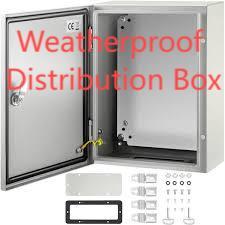
Project planners frequently position a Portable Distribution Box centrally on sites to shorten cable runs and consolidate protection devices, improving setup speed and reducing trip hazards. Proper selection, careful configuration, and disciplined commissioning ensure mobile power units perform reliably across events, construction works, and emergency operations while protecting personnel and equipment.
Temporary distribution units serve in diverse environments — from wet outdoor festivals to dusty construction yards — and each setting imposes different mechanical and electrical demands. This guide explains how to assess requirements, choose robust mechanical designs, lay out safe internal wiring, follow rigorous commissioning steps, and implement a maintenance regime that prolongs service life and minimizes downtime.
Assessing site power requirements
Start with a complete inventory of expected loads. List devices, note continuous and peak currents, and identify motor inrush or startup characteristics. Decide whether single-phase or three-phase distribution is necessary and size feeders and breakers with appropriate safety margins. Check upstream protection coordination so faults isolate locally rather than tripping the main site supply. Also factor environmental exposure and administrative needs—lockable panels for public events or extra ruggedness for heavy construction.
Mechanical design and portability features
Balance robustness with weight for safe handling. Housings made of impact-resistant polymer or lightweight metals with internal bracing resist deformation during transport. Look for ergonomic handles, integrated cable storage, lifting points, and stackable layouts to ease logistics. Weatherproof designs should include sealed cable glands and elevated terminal compartments to keep moisture, dirt, and debris away from live parts. Consider shock-absorbing feet or mounts for sites with vehicle traffic or machinery movement.
Electrical layout, labeling, and user ergonomics
A logical internal arrangement reduces connection errors and simplifies troubleshooting. Separate power and control wiring, secure internal looms, and use clearly marked terminal blocks with defined conductor ranges. Place commonly used breakers and outlets on the front panel at ergonomic heights and apply durable, weather-resistant labeling for voltages and maximum permitted loading. Include a concise single-line diagram on the door to show supply, protective devices, and load branches to speed diagnostics in the field.
Nante Modular Features and Options
Modularity speeds repair and reduces spare-parts inventory. Favor designs that accept replaceable outlet modules and standardized circuit-breaker mounts so technicians can swap components quickly without lengthy downtime. Look for captive fasteners, lockable breaker handles, and visible status indicators for power and fault conditions. Request manufacturer datasheets showing short-circuit withstand ratings, protection-device curves, terminal torque values, and recommended inspection intervals to support safe, repeatable maintenance.
Commissioning, maintenance, and troubleshooting
Before first energization, perform insulation resistance tests and verify earth continuity. Confirm breaker trip settings and test residual-current devices under simulated conditions. Capture baseline thermal images of terminal blocks under typical load to enable future comparisons. Establish routine inspections: check seals and glands, retorque terminals per manufacturer guidance, and watch for corrosion or thermal discoloration. For intermittent faults, isolate branches and test loads individually; overheating usually indicates loose terminations and should be addressed by de-energizing and replacing any thermally damaged parts.
Operator training and fleet management
Human factors matter. Provide concise operating instructions to site teams describing connector handling, maximum circuit loads, and emergency isolation steps. Enforce lockout–tagout during any intervention and keep common spares—gaskets, glands, breakers—on hand to reduce mean time to repair. Track deployment histories and maintenance logs for each unit to identify performance trends and schedule phased upgrades when modules begin to show age-related failures.
Lifecycle planning and procurement tips
Plan investments with scalability in mind. Standardize across fleets to simplify spare stocking and technician training. Prefer configurations that allow future capacity increases via additional modules or spare conduit entries. When specifying procurement, prioritize vendors that publish clear technical data and provide field-support documentation; robust after-sales service frequently saves more in operational uptime than small upfront cost savings.
Portable distribution assets are essential tools for safe, efficient temporary power. Thoughtful matching of capacity, environment, ergonomics, and maintenance discipline keeps people safe and projects on schedule. For product models, technical specifications, and ordering information, see the manufacturer’s product page: https://www.nante.com/product/
Invest in Luxury
Access curated opportunities across luxury assets, private markets, and alternative investments designed for long-term value creation and portfolio diversification.
Explore Opportunities
Private Cannabis Investing
The global cannabis market is expected to grow rapidly in the coming years. With this growth, investing with TheSeattleCannabis can be a smart move for those looking to diversify their portfolio. .
View Opportunities
 English
 French
 Spanish
 Portuguese
 Deutsch
 Turkish
 Dutch
Dutch
 Italiano
 Russian
 Romaian
 Portuguese (Brazil)
 Greek
Greek